

Finance
Bestsellers
Our best selling (e)books
Coming Soon
Our upcoming releases
 Subscription
Subscribe now! >





Finance & Controlling Essentials

SAP S/4HANA Finance
– An Introduction
394 pages, hardcover
Beginning your finance transformation? Looking to learn what SAP S/4HANA has to offer? This book is your starting point for SAP S/4HANA Finance! Learn about the suite’s architecture and explore its capabilities for your core finance processes: financial accounting, management
… More about the book
from $74.99
Available
E-book | Print edition | Bundle

Configuring SAP S/4HANA Finance
744 pages, hardcover
Starting a new SAP S/4HANA Finance implementation? Get it right the first time! From setting up an organizational structure to defining master data, this comprehensive guide to configuring SAP S/4HANA Finance walks you through each key task. Follow step-by-step instructions
… More about the book
from $84.99
Available
E-book | Print edition | Bundle

Financial Accounting with SAP S/4HANA: Business User Guide
571 pages, hardcover
Running accounting in SAP S/4HANA Finance? This is your hands-on guide! Learn how financial accounting works with the Universal Journal and understand key organizational structures. Get step-by-step instructions to perform your finance tasks for the general ledger, accounts payable, accounts
… More about the book
from $74.99
Available
E-book | Print edition | Bundle

Financial Accounting in SAP ERP: Business User Guide
628 pages, hardcover
Get the SAP FI expertise you need! This guide for business users shows you how to run Financial Accounting in SAP ERP. Walk through key FI processes in the general ledger, accounts payable and receivable, asset accounting, and more using
… More about the book
from $74.99
Available
E-book | Print edition | Bundle

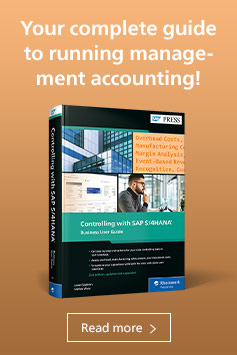
Controlling with SAP S/4HANA: Business User Guide
697 pages, hardcover
If you run management accounting in SAP S/4HANA, this is the user guide you need! Start with the Universal Journal basics, and then set up your organizational structures and master data. Walk through your routine transactions, from performing overhead cost
… More about the book
from $84.99
Available
E-book | Print edition | Bundle

Controlling with SAP ERP: Business User Guide
730 pages, hardcover
Your to-do list just got easier! With this guide for Controlling business users, learn how to manage master data, create budgets and investment plans, conduct actual postings, and execute a period close more efficiently. Get the detailed instructions and expert
… More about the book
from $74.99
Available
E-book | Print edition | Bundle

Reporting with SAP S/4HANA: Business User Guide
537 pages, hardcover
Make business reporting easy with this all-in-one user guide! Explore the SAP Fiori user experience and see how its role-based approach makes gathering data from your system simpler and faster. Then dive into reporting requirements for different business areas, including
… More about the book
from $84.99
Available
E-book | Print edition | Bundle

SAP Analytics Cloud: Financial Planning and Analysis
468 pages, hardcover
FP&A is now in the cloud! In this comprehensive guide, begin by provisioning your data for financial planning and analysis in SAP Analytics Cloud. Then follow step-by-step instructions to set up the planning process and use SAP Analytics Cloud’s automated
… More about the book
from $84.99
Available
E-book | Print edition | Bundle

New and Upcoming FICO Releases
Digital Payments with SAP
– Credit Card Processing, PSP Integration, and PCI Compliance
449 pages, hardcover
Implement the SAP digital payments add-on to standardize your payment operations and ensure PCI compliance! Start by setting up the add-on in SAP BTP and then integrate it with your payment service providers (PSPs). Get step-by-step implementation and configuration instructions,
… More about the book
from $84.99
Available
E-book | Print edition | Bundle
Intelligent Finance with SAP
– AI-Based Automation and Custom Solutions
535 pages, hardcover
You’ve seen the hype around AI—but are you ready to make the most of it? With this book, discover how standard and generative AI can elevate your finance capabilities. Take a tour of SAP’s embedded and service-based AI tools for
… More about the book
from $84.99
Available
E-book | Print edition | Bundle
Universal Allocations with SAP S/4HANA
– Universal and Classic Cost Flows
315 pages
Simplify your complex cost flows with universal allocations! Learn how to set up and run each type of allocation in your SAP S/4HANA system: cost center allocations, margin analysis allocations, profit center allocations, and plan allocations. Get instructions for the
… More about the book
approx. $99.99
Pre-order now
Available on 10/28/2026
E-book
Financial Close with SAP S/4HANA
533 pages, hardcover
Ready to close your books in SAP S/4HANA? Walk through the end-to-end process, from preclose to year-end close. Review specific activities for period-end close, management accounting close, group reporting, and consolidation. Then streamline your task management with SAP Advanced Financial
… More about the book
from $94.99
Available
E-book | Print edition | Bundle
SAP Document and Reporting Compliance
– The Comprehensive Guide for Finance and Tax
637 pages, hardcover
Dive into the digital compliance landscape! Start by configuring your tax settings in SAP S/4HANA based on your business requirements. Next, set up SAP Document and Reporting Compliance to enable seamless eDocument creation, validation, transmission, and reconciliation as well as
… More about the book
from $94.99
Available
E-book | Print edition | Bundle

Payment and Bank Communication Management with SAP
653 pages, hardcover
Organized, precise payment processing and bank communication is key when it comes to financial transactions! Learn how SAP S/4HANA enables you to send and receive payment data from your bank using SAP Bank Communication Management, in-house banking, advanced payment management,
… More about the book
from $94.99
Available
E-book | Print edition | Bundle
SAP FI/CO E-Bites
Transitioning from Central Finance to SAP S/4HANA
113 pages
Is your organization using Central Finance, and ready to take the next steps toward the full SAP S/4HANA suite? This E-Bite will show you the way! After learning about the architecture of your landscape transformation and corresponding prerequisites, you’ll explore
… More about the book
$29.99
Available
E-Bite
Introducing Universal Parallel Accounting with SAP S/4HANA
140 pages
Harmonize your currencies and ledgers in SAP S/4HANA with universal parallel accounting (UPA)! In this E-Bite, learn about the setup and role of UPA in each finance area: financial accounting, asset accounting, production accounting, inventory accounting, and event-based revenue recognition.
… More about the book
approx. $29.99
Pre-order now
Available on 12/10/2026
E-Bite
Advanced Valuation with SAP S/4HANA Finance
108 pages
Calibrate your local and functional currencies before period-end close with advanced valuation! Get step-by-step instructions for essential configuration settings, from aging increments to account mapping in SAP S/4HANA. Then run through the advanced valuation process: long-term asset and liability discounting,
… More about the book
$34.99
Available
E-Bite

Introducing Intelligent Finance with AI from SAP
87 pages
Is AI really the future—or is it already here? Get a good look at how SAP has embedded AI into its finance applications, and see how machine learning has already accelerated cash and invoice management, predictive accounting, FP&A, and more.
… More about the book
$24.99
Available
E-Bite

Introducing Intercompany Matching and Reconciliation (ICMR) with SAP S/4HANA
145 pages
See what’s new with ICMR in SAP S/4HANA! Get started with the basics of intercompany reconciliation during local, group, and hybrid close. Learn about the core ICMR processes: data collection, document matching, exception handling, and results validation. Take your first
… More about the book
$29.99
Available
E-Bite

Introducing Intelligent Asset Accounting with SAP
99 pages
Asset accounting is getting smarter. Learn what’s possible with intelligent asset accounting in SAP S/4HANA Cloud, both public and private! Start with the basics of parallel valuation and then see how intelligent asset accounting’s flexible configuration improves end-to-end accounting. Walk
… More about the book
$29.99
Available
E-Bite
Master Your Key Tasks with Controlling in SAP S/4HANA
SAP S/4HANA Finance
– An Introduction
394 pages, hardcover
Beginning your finance transformation? Looking to learn what SAP S/4HANA has to offer? This book is your starting point for SAP S/4HANA Finance! Learn about the suite’s architecture and explore its capabilities for your core finance processes: financial accounting, management
… More about the book
from $74.99
Available
E-book | Print edition | Bundle
Configuring SAP S/4HANA Finance
744 pages, hardcover
Starting a new SAP S/4HANA Finance implementation? Get it right the first time! From setting up an organizational structure to defining master data, this comprehensive guide to configuring SAP S/4HANA Finance walks you through each key task. Follow step-by-step instructions
… More about the book
from $84.99
Available
E-book | Print edition | Bundle
Controlling with SAP S/4HANA: Business User Guide
697 pages, hardcover
If you run management accounting in SAP S/4HANA, this is the user guide you need! Start with the Universal Journal basics, and then set up your organizational structures and master data. Walk through your routine transactions, from performing overhead cost
… More about the book
from $84.99
Available
E-book | Print edition | Bundle

Material Ledger in SAP S/4HANA
– Functionality and Configuration
522 pages, hardcover
The Material Ledger is mandatory in SAP S/4HANA. Get it up and running smoothly with this all-in-one resource! Configure key settings for currency conversion, ledgers, and valuation views. Then set up and run your key ML processes, step by step:
… More about the book
from $84.99
Available
E-book | Print edition | Bundle

Production Variance Analysis in SAP S/4HANA
301 pages, hardcover
To effectively plan production costs, you know that guesswork and projections aren’t enough. Optimize your production processes—and increase profitability—with this guide to production variance analysis in SAP S/4HANA. Start with the planning basics, and then perform costing runs and create
… More about the book
from $94.99
Available
E-book | Print edition | Bundle

Product Cost Controlling with SAP S/4HANA
674 pages, hardcover
Ready to implement product cost controlling in SAP S/4HANA? This comprehensive guide is what you need! Walk through master data setup and cost estimate configuration, click by click. Dive into the details of integrated planning, including planned and actual costs
… More about the book
from $94.99
Available
E-book | Print edition | Bundle



SAP S/4HANA for Finance Professionals
SAP S/4HANA Finance
– An Introduction
394 pages, hardcover
Beginning your finance transformation? Looking to learn what SAP S/4HANA has to offer? This book is your starting point for SAP S/4HANA Finance! Learn about the suite’s architecture and explore its capabilities for your core finance processes: financial accounting, management
… More about the book
from $74.99
Available
E-book | Print edition | Bundle
Configuring SAP S/4HANA Finance
744 pages, hardcover
Starting a new SAP S/4HANA Finance implementation? Get it right the first time! From setting up an organizational structure to defining master data, this comprehensive guide to configuring SAP S/4HANA Finance walks you through each key task. Follow step-by-step instructions
… More about the book
from $84.99
Available
E-book | Print edition | Bundle

Central Finance and SAP S/4HANA
606 pages, hardcover
Are you starting your SAP S/4HANA journey? If deploying Central Finance is your first step, get the answers you need to the questions you have! How does Central Finance fit in to your IT landscape? How will it impact your
… More about the book
from $74.99
Available
E-book | Print edition | Bundle

Implementing Central Finance with SAP S/4HANA
853 pages, hardcover
Modernize your financial landscape with Central Finance and SAP S/4HANA! Follow step-by-step instructions for implementing Central Finance, from harmonizing your master data to running reconciliation reports. Establish your source and target systems, and then set up the initial data load
… More about the book
from $94.99
Available
E-book | Print edition | Bundle

SAP Activate
– Project Management for SAP S/4HANA Cloud and SAP S/4HANA
571 pages, hardcover
Gearing up for SAP S/4HANA? Pave the way for a successful implementation project with SAP Activate! This handbook guides you through the SAP Activate methodology for agile project planning and delivery. Walk through your new implementation—public cloud, private cloud, or
… More about the book
from $84.99
Available
E-book | Print edition | Bundle

SAP S/4HANA Cloud
– An Introduction
538 pages, hardcover
SAP S/4HANA Cloud has a lot to offer—so see what’s possible! Explore core functionality like finance, logistics, and reporting with embedded analytics. Learn how SAP S/4HANA Cloud impacts your users and how it can be extended, integrated, and adopted by
… More about the book
from $74.99
Available
E-book | Print edition | Bundle
Central Finance and SAP S/4HANA
Transitioning from Central Finance to SAP S/4HANA
113 pages
Is your organization using Central Finance, and ready to take the next steps toward the full SAP S/4HANA suite? This E-Bite will show you the way! After learning about the architecture of your landscape transformation and corresponding prerequisites, you’ll explore
… More about the book
$29.99
Available
E-Bite
Central Finance and SAP S/4HANA
606 pages, hardcover
Are you starting your SAP S/4HANA journey? If deploying Central Finance is your first step, get the answers you need to the questions you have! How does Central Finance fit in to your IT landscape? How will it impact your
… More about the book
from $74.99
Available
E-book | Print edition | Bundle
Implementing Central Finance with SAP S/4HANA
853 pages, hardcover
Modernize your financial landscape with Central Finance and SAP S/4HANA! Follow step-by-step instructions for implementing Central Finance, from harmonizing your master data to running reconciliation reports. Establish your source and target systems, and then set up the initial data load
… More about the book
from $94.99
Available
E-book | Print edition | Bundle
Finance & Controlling for Business Users
Controlling with SAP S/4HANA: Business User Guide
697 pages, hardcover
If you run management accounting in SAP S/4HANA, this is the user guide you need! Start with the Universal Journal basics, and then set up your organizational structures and master data. Walk through your routine transactions, from performing overhead cost
… More about the book
from $84.99
Available
E-book | Print edition | Bundle
Controlling with SAP ERP: Business User Guide
730 pages, hardcover
Your to-do list just got easier! With this guide for Controlling business users, learn how to manage master data, create budgets and investment plans, conduct actual postings, and execute a period close more efficiently. Get the detailed instructions and expert
… More about the book
from $74.99
Available
E-book | Print edition | Bundle
Financial Accounting with SAP S/4HANA: Business User Guide
571 pages, hardcover
Running accounting in SAP S/4HANA Finance? This is your hands-on guide! Learn how financial accounting works with the Universal Journal and understand key organizational structures. Get step-by-step instructions to perform your finance tasks for the general ledger, accounts payable, accounts
… More about the book
from $74.99
Available
E-book | Print edition | Bundle
Financial Accounting in SAP ERP: Business User Guide
628 pages, hardcover
Get the SAP FI expertise you need! This guide for business users shows you how to run Financial Accounting in SAP ERP. Walk through key FI processes in the general ledger, accounts payable and receivable, asset accounting, and more using
… More about the book
from $74.99
Available
E-book | Print edition | Bundle

Using SAP S/4HANA
– An Introduction for Business Users
420 pages, paperback
Get to work in SAP S/4HANA with this introductory guide! Learn how to navigate your user interface, manage and report on your data, customize your reports, and tailor the system to your preferences. Then walk through daily tasks for several
… More about the book
from $24.99
Available
E-book | Print edition | Bundle

Using SAP ERP
– An Introduction for Beginners and Business Users
387 pages, paperback w/ flaps
Do you need to learn SAP for your day-to-day work? Get the detailed steps and screenshots that walk you through the processes you need to do your job. Get comfortable with logging on to and navigating the system, maintaining your
… More about the book
from $24.99
Available
E-book | Print edition | Bundle
Finance & Controlling for Consultants
Configuring SAP S/4HANA Finance
744 pages, hardcover
Starting a new SAP S/4HANA Finance implementation? Get it right the first time! From setting up an organizational structure to defining master data, this comprehensive guide to configuring SAP S/4HANA Finance walks you through each key task. Follow step-by-step instructions
… More about the book
from $84.99
Available
E-book | Print edition | Bundle
Implementing Central Finance with SAP S/4HANA
853 pages, hardcover
Modernize your financial landscape with Central Finance and SAP S/4HANA! Follow step-by-step instructions for implementing Central Finance, from harmonizing your master data to running reconciliation reports. Establish your source and target systems, and then set up the initial data load
… More about the book
from $94.99
Available
E-book | Print edition | Bundle

Configuring Financial Accounting in SAP ERP
916 pages, hardcover
This is your comprehensive guide to configuring Financial Accounting in SAP ERP! Brush up on the old standbys—Accounts Payable, Account Receivable, SAP General Ledger, and Asset Accounting—and then dive in to Contract Accounts Receivable and Payable, Consolidation, Lease Accounting, Travel
… More about the book
$84.99
Unavailable

Configuring Controlling in SAP ERP
526 pages, hardcover
Configure SAP ERP Controlling to reflect your organization's unique processes! First create organizational objects like company codes and cost centers and assign them to each other, and then dig into the critical CO modules. Follow step-by-step instructions for managing master
… More about the book
$74.99
Available
E-book
SAP for Beginners and Business Users
Using SAP S/4HANA
– An Introduction for Business Users
420 pages, paperback
Get to work in SAP S/4HANA with this introductory guide! Learn how to navigate your user interface, manage and report on your data, customize your reports, and tailor the system to your preferences. Then walk through daily tasks for several
… More about the book
from $24.99
Available
E-book | Print edition | Bundle
Using SAP ERP
– An Introduction for Beginners and Business Users
387 pages, paperback w/ flaps
Do you need to learn SAP for your day-to-day work? Get the detailed steps and screenshots that walk you through the processes you need to do your job. Get comfortable with logging on to and navigating the system, maintaining your
… More about the book
from $24.99
Available
E-book | Print edition | Bundle
SAP Fiori Apps for SAP S/4HANA
– The Quick Reference Guide
681 pages, paperback
Are you working with SAP Fiori? Then you need an encyclopedia of applications at your fingertips! Look up more than 1,700 apps and find need-to-know information: What does the app do? How does it enhance your workflow? Does it replace
… More about the book
from $64.99
Available
E-book | Print edition | Bundle

SAP Transaction Codes
– Your Quick Reference to Transactions in SAP ERP
648 pages, paperback
From A to Z, or more appropriately, from AB01 to XK99, this is the SAP transaction code encyclopedia you've been waiting for! Learn how to use more than 3,000 transaction codes with ease in your daily SAP ERP work, whether
… More about the book
from $44.99
Available
E-book | Print edition | Bundle
Excel
– The Comprehensive Guide
910 pages, paperback
If you’re using Excel, this is the all-in-one manual you need—brimming with solutions for every conceivable task! Learn how to design tables, use formulas to perform calculations, create analyses, graphically present your data, and share your results. With detailed coverage
… More about the book
from $49.99
Available
E-book | Print edition | Bundle

The SAP Project
– More Than a Survival Guide
573 pages, paperback
Help your business team prepare for and participate in the SAP project journey! Get an early read on timelines, processes, responsibilities, and potential setbacks. Understand how your implementation, upgrade, or migration is structured, how to assemble the deliverables, and how
… More about the book
from $44.99
Available
E-book | Print edition | Bundle